




What Is a Gold IRA Rollover?
A gold IRA rollover is the process of moving funds from an existing IRA or 401(k) into a self-directed IRA that holds physical gold, completing tax-free if done as a direct trustee-to-trustee transfer. Unlike a standard IRA that holds stocks, bonds, and mutual funds, a gold IRA lets you own physical bars and coins that meet IRS purity standards under IRC Section 408(m).
A gold IRA operates as either a Traditional IRA (pre-tax contributions, taxable withdrawals) or a Roth IRA (post-tax contributions, tax-free qualified withdrawals), following the same IRS rules as their paper-asset equivalents. The IRS sets the 2026 gold IRA contribution limit at $7,000 ($8,000 if you are 50 or older), per IRS Publication 590-B. Rollovers from existing 401(k) or IRA accounts are unlimited and do not count against your annual contribution cap.
How to Convert Your IRA to Gold: 3 Steps
Converting an IRA to gold takes three steps — open a self-directed IRA, transfer funds, and purchase IRS-approved metals — and typically completes within 10–21 business days.
Step 1: Open a Self-Directed IRA
Choose an IRS-approved custodian that specializes in precious metals IRAs. Provide identification and beneficiary information. Select your account type: Traditional IRA (tax-deferred growth) or Roth IRA (tax-free withdrawals in retirement).
Step 2: Initiate a Direct Rollover (Trustee-to-Trustee Transfer)
Request a direct rollover from your current IRA or 401(k) custodian. In a direct rollover, funds move straight between custodians — you never touch the money. This method is tax-free, penalty-free, and has no time limits. Avoid indirect rollovers whenever possible (see Direct vs. Indirect Rollover below).
Step 3: Purchase IRS-Approved Precious Metals
After you fund your self-directed IRA, instruct your custodian to purchase IRS-approved gold on your behalf — minimum 99.5% purity required under IRC Section 408(m). Popular IRS-approved options include American Gold Eagle coins, Canadian Gold Maple Leaf coins, and PAMP Suisse or Credit Suisse gold bars. Your gold IRA dealer ships purchased metals directly to your designated IRS-approved depository, bypassing your hands entirely to preserve tax-deferred status.

Secure your retirement with precious metals
IRS Rules: What Gold Qualifies for an IRA
The IRS requires gold held in an IRA to be at least 99.5% pure (per IRC Section 408(m)), prohibits collectible and numismatic coins, and mandates storage at an IRS-approved depository — the IRS prohibits home storage of all IRA-held metals.
IRS Purity Requirements by Metal
| Metal | Minimum Purity | Popular IRS-Approved Products |
|---|---|---|
| Gold | 99.5% (.995) | American Gold Eagle, Canadian Gold Maple Leaf, PAMP Suisse bars, Credit Suisse bars |
| Silver | 99.9% (.999) | American Silver Eagle, Canadian Silver Maple Leaf |
| Platinum | 99.95% (.9995) | American Platinum Eagle, Canadian Platinum Maple Leaf |
| Palladium | 99.95% (.9995) | Canadian Palladium Maple Leaf |
What is NOT allowed: Numismatic (collectible) coins, coins below purity thresholds, and any metals stored at home. The IRS classifies home storage of IRA metals as a taxable distribution, triggering income tax plus a 10% early withdrawal penalty if you are under age 59½. So-called "checkbook IRAs" or "home storage gold IRAs" face increasing IRS scrutiny and audit risk.
Your gold IRA custodian ships all physical metals directly to an IRS-approved depository because the IRS treats home storage as a taxable distribution subject to income tax and a 10% early-withdrawal penalty.
Gold IRA Fees: What You'll Actually Pay
Expect to pay $50–$80 in one-time setup fees, $75–$300 in annual custodian fees, and $100–$300 in annual storage fees — a total first-year cost of $225–$680 for most providers.
| Fee Type | Typical Range | What It Covers |
|---|---|---|
| Account Setup | $50–$80 (one-time) | Account establishment, compliance checks, initial paperwork |
| Annual Custodian Fee | $75–$300/year | Account administration, IRS reporting (Form 5498), statements |
| Annual Storage Fee | $100–$300/year | Vault insurance, security, depository access (segregated storage costs ~$50–$100 more than commingled) |
| Dealer Premium | 3–10% over spot price | Markup over the current gold spot price when purchasing metals |
| Selling/Liquidation | Varies | Spread between buy and sell price; confirm buyback policy before purchasing |
The spot price is the current market price of gold per ounce. Dealers charge a premium (markup) above spot — typically 3–10% depending on the product. Always compare the total cost including premiums, not just the stated fees.
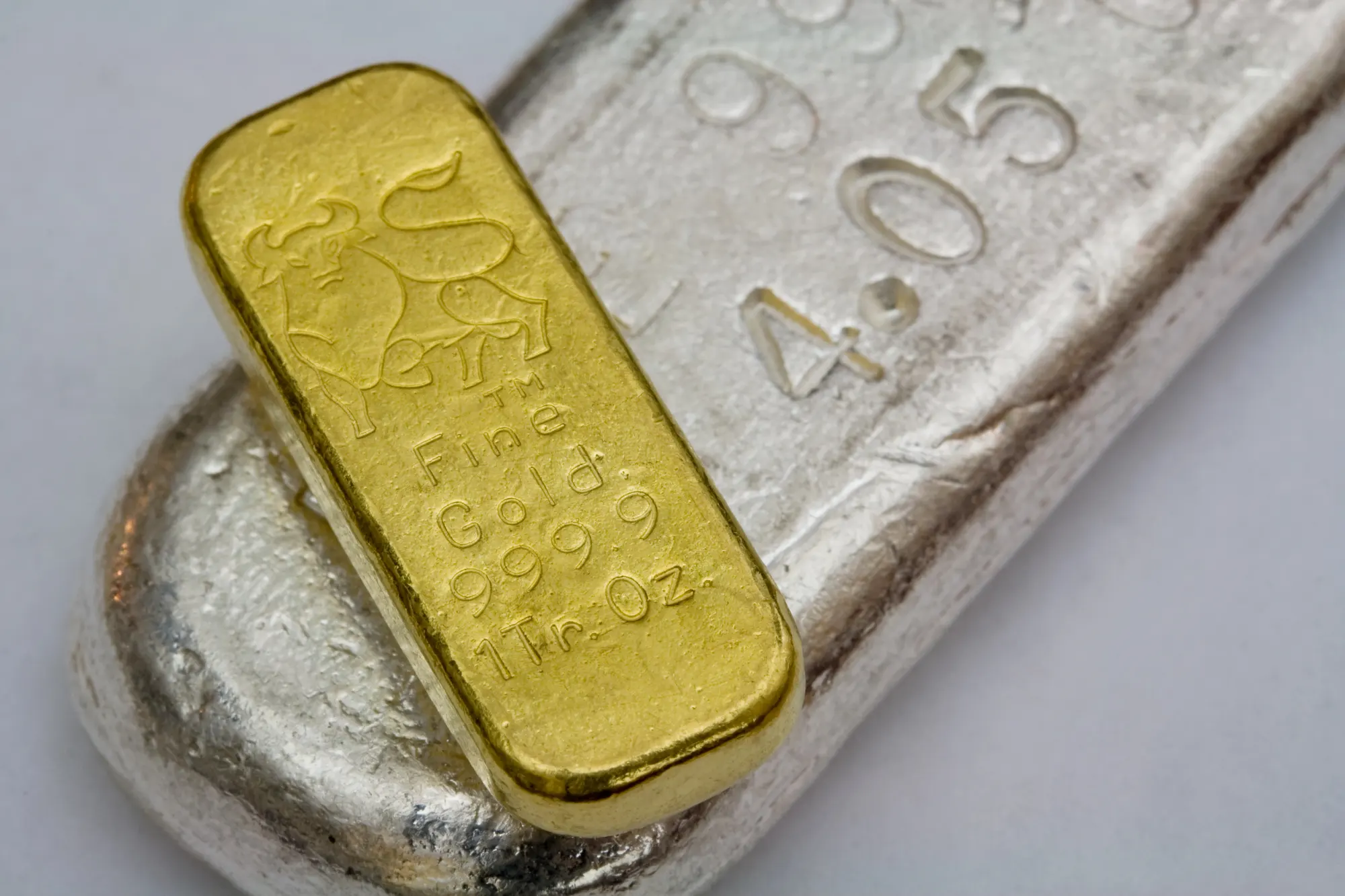
Physical gold and silver for your portfolio

Direct vs. Indirect Rollover: Tax & Penalty Rules
A direct rollover is always preferable: it avoids the 60-day redeposit deadline, the 20% IRS withholding on 401(k) distributions, and the 10% early withdrawal penalty for investors under 59½.
| Feature | Direct Rollover (Trustee-to-Trustee) | Indirect Rollover |
|---|---|---|
| How it works | Funds transfer directly between custodians | Funds sent to you; you redeposit into new IRA |
| Time limit | None | 60 days to redeposit 100% of distribution |
| Tax withholding | None | 20% mandatory withholding on 401(k) distributions |
| Penalty risk | None | 10% early withdrawal penalty if under 59½ and deadline missed |
| Frequency limit | Unlimited | Once per 12-month period (per IRA) |
| Recommendation | ✅ Always preferred | ⚠️ Use only if direct rollover unavailable |
With an indirect rollover, the IRS withholds 20% from 401(k) distributions. You must cover that 20% out-of-pocket and redeposit the full amount within 60 days to avoid taxes. Any shortfall is treated as a taxable distribution. (Source: IRS Publication 590-B; IRC Section 402(c))

Explore diverse gold investment options for your retirement portfolio
Benefits of a Gold IRA (With Data)
Gold’s ~0.05 correlation with U.S. equities makes it one of the most effective portfolio diversifiers available inside a tax-advantaged retirement account.
Tax-deferred growth (Traditional Gold IRA): You pay no capital gains tax when gold appreciates inside the account. Taxes are deferred until withdrawal, typically at a lower retirement income tax rate.
Tax-free growth (Roth Gold IRA): Qualified withdrawals after age 59½ are completely tax-free, including all gold appreciation.
Inflation hedge: Gold has maintained purchasing power across 200+ years of monetary history. During the 1970s stagflation period, gold rose over 2,300% while U.S. bonds lost real value. Gold moves nearly independently of U.S. equities, averaging a correlation of 0.0 to +0.1 with the S&P 500 over the past 20 years (World Gold Council, 2024 Annual Report).
Portfolio diversification: During the 2008 financial crisis, gold gained approximately 5.5% while the S&P 500 declined 37%, illustrating its role as a portfolio hedge. Gold’s near-zero correlation with equities (~0.05 average) reduces overall portfolio volatility.
No counterparty risk: Unlike stocks or bonds, physical gold is not a liability of any corporation or government. Its value does not depend on a third party’s solvency.

Secure your retirement with physical precious metals
Should You Convert Your IRA to Gold? Pros and Cons
Converting to a gold IRA makes the most sense for investors within 10–20 years of retirement who want inflation protection and hold at least $25,000 in existing IRA assets to offset fee impact. Here is a balanced framework to help you decide:
Gold IRA Pros
- Inflation hedge: Gold has maintained purchasing power across 200+ years of monetary history and rose approximately 60% during the 2020–2024 inflationary period.
- Portfolio diversification: Gold’s near-zero correlation with equities (~0.05) reduces overall portfolio volatility and provides a hedge during equity market downturns.
- Tax-advantaged growth: A Traditional Gold IRA offers tax-deferred growth; a Roth Gold IRA offers tax-free qualified withdrawals — identical benefits to standard IRAs.
- Tangible asset ownership & wealth preservation: Physical gold carries no counterparty risk — its value does not depend on any corporation’s or government’s solvency, providing long-term wealth preservation.
- Portfolio allocation flexibility: A self-directed IRA lets you set your own precious metals allocation percentage — typically recommended at 5–15% of total retirement assets.
Gold IRA Cons
- Higher fee drag: Annual costs of $175–$600/year erode returns in flat gold markets; gold must appreciate approximately 0.5–1% annually just to break even versus a zero-fee index fund IRA.
- Price volatility: Gold declined approximately 45% between 2011 and 2015. It is not a risk-free asset despite its safe-haven reputation.
- Reduced liquidity: Selling physical gold in an IRA requires coordinating custodian, depository, and dealer — a process that can take 3–7 business days versus instant ETF liquidation.
- No dividends or yield: Unlike stocks or bonds, physical gold generates zero income. Returns depend entirely on price appreciation.
- Counterparty risk from custodian chain: You rely on the custodian and IRS-approved depository to safeguard physical assets; custodian insolvency creates recovery complexity not present with exchange-listed securities.
Who Should Consider a Gold IRA?
| Investor Profile | Recommendation |
|---|---|
| Within 10–20 years of retirement, account > $50,000, wants diversification | Strong candidate — fees proportionally small; diversification benefit is meaningful |
| Early career, smaller account, decades to retirement | Reconsider — higher fee drag over many years and opportunity cost vs. low-cost index funds |
| Already holds 5–15% in gold/commodities | Evaluate carefully — avoid overconcentration; gold allocation above 20% increases portfolio risk |
| Concerned about inflation, currency devaluation, or systemic financial risk | Good fit — gold’s independence from financial-system risk is its core value proposition |
Portfolio allocation guideline: Most financial advisors recommend allocating 5–15% of a retirement portfolio to precious metals. Investors with less than $25,000 in rollover funds should carefully evaluate whether fee drag outweighs diversification benefits.
How Custodians and Depositories Work
Augusta Precious Metals, Goldco, and Birch Gold Group are the highest-rated gold IRA companies in 2026 based on BBB rating, fee transparency, minimum investment, and customer service scores. Each works with IRS-approved custodians who handle the administrative and regulatory requirements of your self-directed IRA.
Your custodian manages account setup, IRS reporting (including Form 5498), and coordinates with the depository for metal storage. The custodian does not provide investment advice — that’s the role of the gold IRA company you choose to work with.
Approved Depositories: The most widely used facilities include Delaware Depository (Wilmington, DE), Brink’s Global Services (multiple locations), and International Depository Services (Dallas, TX). Each provides insured, audited storage that meets IRS requirements.
Segregated vs. Commingled Storage: Segregated storage keeps your specific bars and coins in separate containers — you receive the exact same metals back upon distribution. Commingled storage pools metals of the same type, typically costing $50–$100 less per year. Most investors with accounts over $50,000 choose segregated storage for maximum accountability.
Why Consider Converting an IRA to Gold?
Diversification beyond paper assets: A gold IRA adds physical precious metals to a retirement portfolio that may be overweighted in equities and bonds. Gold’s near-zero correlation with the S&P 500 (~0.05 over the past 20 years, per the World Gold Council) means it often moves independently of stock market swings, potentially reducing overall portfolio volatility.
Inflation and currency hedge: Gold has historically maintained purchasing power during periods of high inflation. During the 2020–2024 inflationary period, gold prices rose approximately 60%, outperforming most fixed-income investments. While no asset guarantees future returns, gold’s track record as an inflation hedge spans centuries of monetary history.
Control through a self-directed IRA: A self-directed IRA gives you latitude to choose alternative investments — including physical gold, silver, platinum, and palladium — that fit your personal retirement goals. You select the custodian, the metals, and the depository, maintaining full control over your investment decisions.
What Metals Can a Gold IRA Hold?
A gold IRA can hold gold, silver, platinum, and palladium — provided each metal meets IRS purity minimums under IRC Section 408(m): 99.5% for gold, 99.9% for silver, and 99.95% for platinum and palladium.
Gold options: American Gold Eagle (the only gold coin exempt from the 99.5% purity rule), Canadian Gold Maple Leaf, Australian Gold Kangaroo, Austrian Gold Philharmonic, and PAMP Suisse/Credit Suisse gold bars.
Silver options: American Silver Eagle, Canadian Silver Maple Leaf, and qualifying .999 fine silver bars from approved refiners.
Platinum and palladium: American Platinum Eagle, Canadian Platinum and Palladium Maple Leaf coins.
Gold ETF vs. physical gold IRA: A gold ETF tracks gold’s price through paper shares — you never own physical metal. A gold IRA holds actual bars and coins in a depository. ETFs offer lower fees and instant liquidity; physical gold offers no counterparty risk and tangible ownership. Many investors choose physical gold for retirement accounts specifically for its independence from financial-system risk.
Tax Structure: Traditional vs. Roth Gold IRA
A gold IRA follows the same tax rules as a standard IRA, with the added benefit of holding a tangible, inflation-resistant asset.
Traditional Gold IRA: Contributions may be tax-deductible. Earnings grow tax-deferred. Withdrawals in retirement are taxed as ordinary income. Required Minimum Distributions (RMDs) begin at age 73 (under SECURE Act 2.0).
Roth Gold IRA: Contributions are made with after-tax dollars. Qualified withdrawals after age 59½ are completely tax-free — including all gold appreciation. No RMDs during the account holder’s lifetime.
Annual contribution limits mirror standard IRAs: $7,000 for 2026 ($8,000 if you are age 50 or older, per IRS Publication 590-B). Rollovers from existing accounts are unlimited and do not count against annual contribution caps. Your IRA custodian handles IRS reporting via Form 5498.
Compliance and IRS Rules
Keeping your gold IRA within IRS rules preserves its tax advantages and protects you from penalties. Key compliance points:
- Approved metals only: Use IRS-approved precious metals meeting purity standards under IRC Section 408(m). Numismatic and collectible coins are prohibited.
- Qualified storage: All metals must remain at an IRS-approved depository. Home storage triggers a taxable distribution plus a 10% penalty if under age 59½.
- No self-dealing: You cannot personally use, display, or benefit from metals in your IRA. Prohibited transactions can disqualify the entire account.
- Required Minimum Distributions: Traditional Gold IRA holders must begin RMDs at age 73. You may take distributions as cash (metals sold, cash distributed) or as an in-kind distribution (physical metals shipped to you).
- IRS reporting: Your custodian files Form 5498 annually. Distributions are reported on Form 1099-R.
Risks and Considerations
Every investment carries risk. A gold IRA offers diversification benefits, but informed investors should understand these considerations:
- Price volatility: Gold prices can fluctuate significantly in the short term. Between 2011 and 2015, gold declined approximately 45% from its peak. Long-term investors should be prepared for multi-year drawdowns.
- Higher fees than traditional IRAs: Between custodian fees ($75–$300/year), storage fees ($100–$300/year), and dealer premiums (3–10% over spot), a gold IRA costs significantly more than a low-cost index fund IRA with expense ratios under 0.10%.
- Liquidity and spreads: Selling physical metals involves a bid-ask spread. The buyback price is typically 1–5% below the current spot price. Always confirm your dealer’s buyback policy before purchasing.
- No dividends or yield: Unlike stocks or bonds, gold generates no income. Returns depend entirely on price appreciation.
- Concentration risk: Most financial advisors recommend allocating no more than 5–15% of a retirement portfolio to precious metals to maintain proper diversification.
How Precious Metals Fit a Retirement Strategy
Financial professionals generally recommend allocating 5–15% of a retirement portfolio to precious metals, depending on age, risk tolerance, and time horizon. This allocation provides meaningful diversification without overconcentration in a single asset class.
A balanced approach might include: 50–65% equities (stocks, index funds), 20–30% fixed income (bonds, CDs), 5–15% precious metals (gold IRA), and 5–10% cash or cash equivalents. Younger investors with longer time horizons may lean toward the lower end of precious metals allocation, while those approaching retirement may increase their allocation as a volatility buffer.
Rebalance your portfolio annually and review your gold IRA allocation whenever market conditions shift significantly. Your self-directed IRA custodian can facilitate buying or selling metals to maintain your target allocation.
How to Evaluate a Gold IRA Company
The right partner can make your IRA-to-gold experience efficient and transparent. Evaluate these criteria when choosing:
- BBB rating and complaint history: Look for companies with A+ or A BBB ratings and minimal unresolved complaints.
- Fee transparency: The best companies publish all fees upfront — setup, annual custodian, storage, and dealer premiums. Avoid companies that obscure costs or refuse to provide written fee schedules.
- Minimum investment: Ranges from $5,000 to $50,000+. Choose a company whose minimums align with your rollover amount.
- Buyback policy: A strong buyback guarantee means you can sell metals back to the dealer at competitive prices without penalty. Confirm this in writing.
- Education and support: Top companies offer one-on-one consultations, educational webinars, and comprehensive guides — not just sales calls.
- Depository relationships: Verify the company works with established, IRS-approved depositories (Delaware Depository, Brink’s, IDS).
About This Review: Methodology & Editorial Standards
How We Ranked These Companies
- IRS compliance history (no enforcement actions on record)
- Fee transparency (published fee schedules vs. “call for pricing”)
- Minimum investment threshold relative to account size
- Buyback guarantee terms (written policy vs. verbal commitment)
- BBB accreditation and complaint response rate
- Verified customer reviews (Google + Trustpilot, minimum 50 reviews)
No company paid for inclusion or placement in this comparison. Company rankings reflect objective criteria only.
Affiliate Disclosure: This site earns referral fees from featured companies. This does not influence rankings; all evaluations use the objective criteria listed above.
Not Investment Advice: Gold IRA investing involves risk, including possible loss of principal. Consult a licensed financial advisor before making rollover decisions. Past performance of gold prices does not guarantee future results.
Sources & Citations
- IRS Publication 590-B: Distributions from Individual Retirement Arrangements
- IRC Section 408(m): IRA Investment Restrictions on Collectibles
- SEC.gov: Investor Alert — Self-Directed IRAs and the Risk of Fraud
- FINRA.org: Verify Custodians and Broker-Dealers
- World Gold Council, 2024 Annual Report — Gold correlation and performance data
Content last reviewed: October 2026 | Next scheduled review: January 2027
Key Takeaways Before You Convert Your IRA to Gold
- Use a direct rollover: A trustee-to-trustee transfer is tax-free, penalty-free, and has no time limit. Avoid indirect rollovers and their 60-day deadline.
- Verify IRS compliance: Only purchase metals meeting IRC Section 408(m) purity standards. Store at an IRS-approved depository — never at home.
- Budget for fees: Expect $225–$680 in first-year costs (setup + custodian + storage). Compare total costs across providers, not just headline fees.
- Choose your tax structure: Traditional IRA for tax-deferred growth and deductible contributions; Roth IRA for tax-free withdrawals in retirement.
- Start with a reputable company: Select a gold IRA company with A+ BBB rating, transparent fees, strong buyback policy, and educational resources.
- Allocate appropriately: Most advisors recommend 5–15% of a retirement portfolio in precious metals. Avoid overconcentration.
- Plan for RMDs: Traditional Gold IRA holders must begin required minimum distributions at age 73. Roth Gold IRAs have no RMDs during the owner’s lifetime.